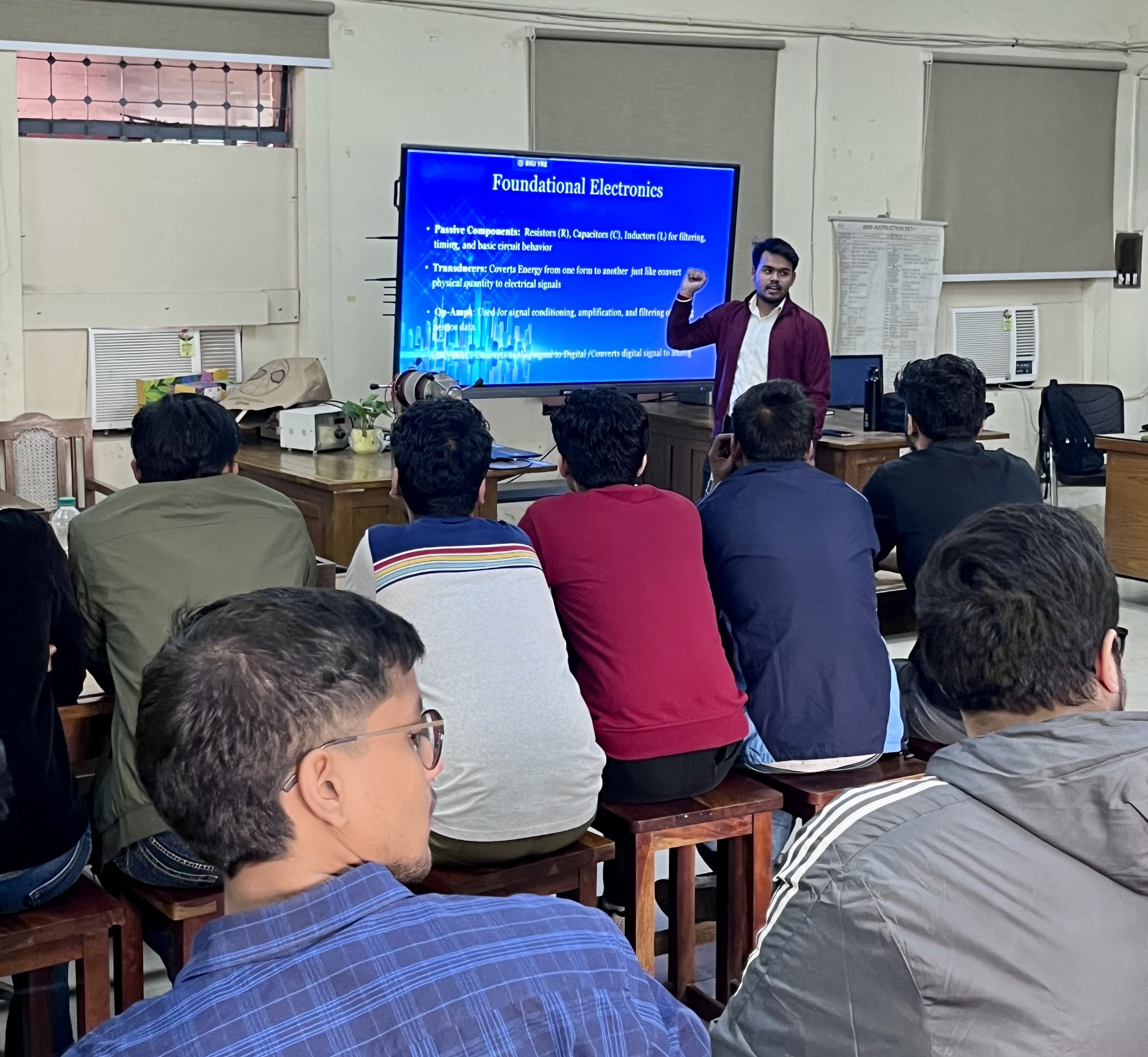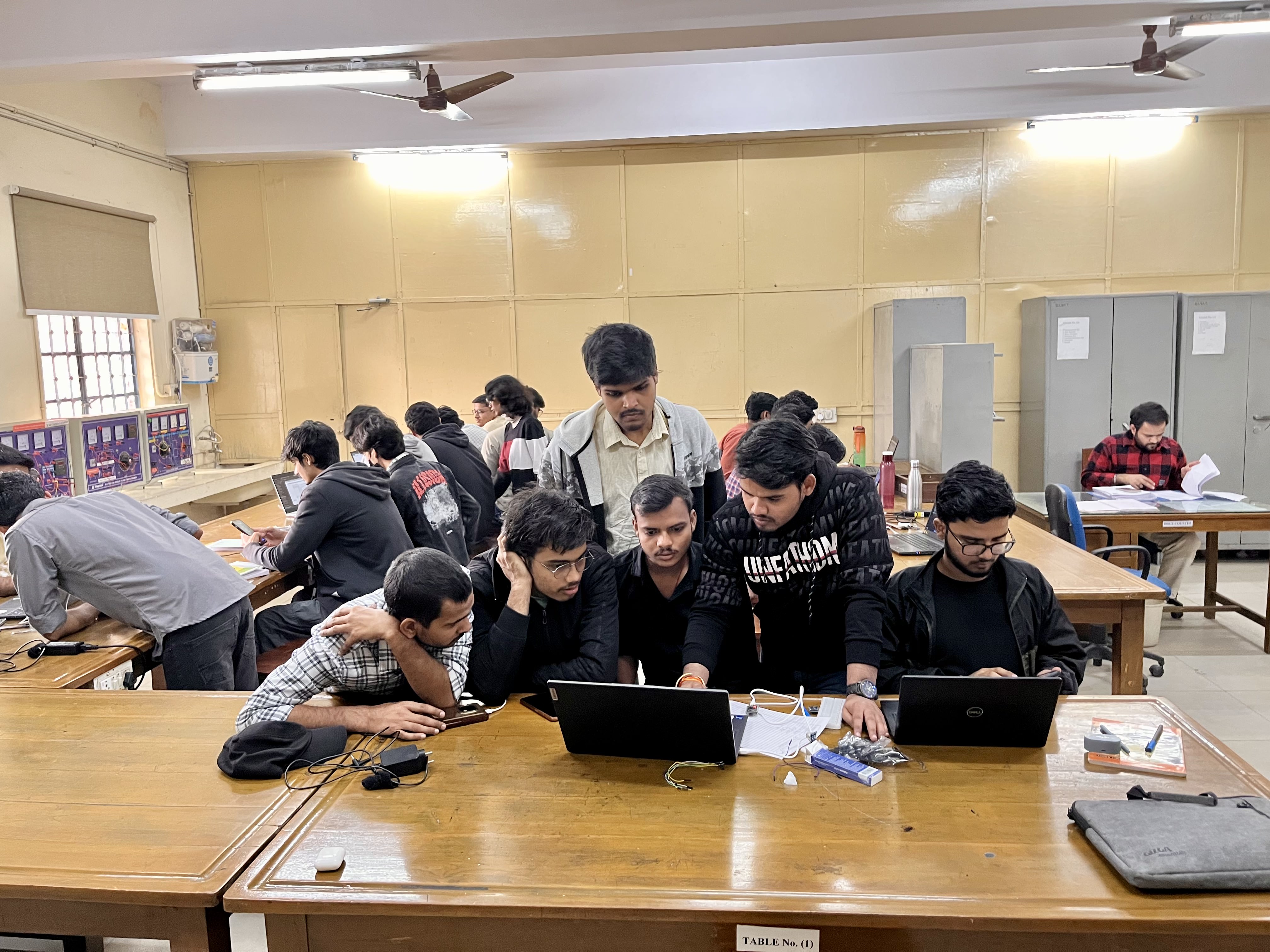
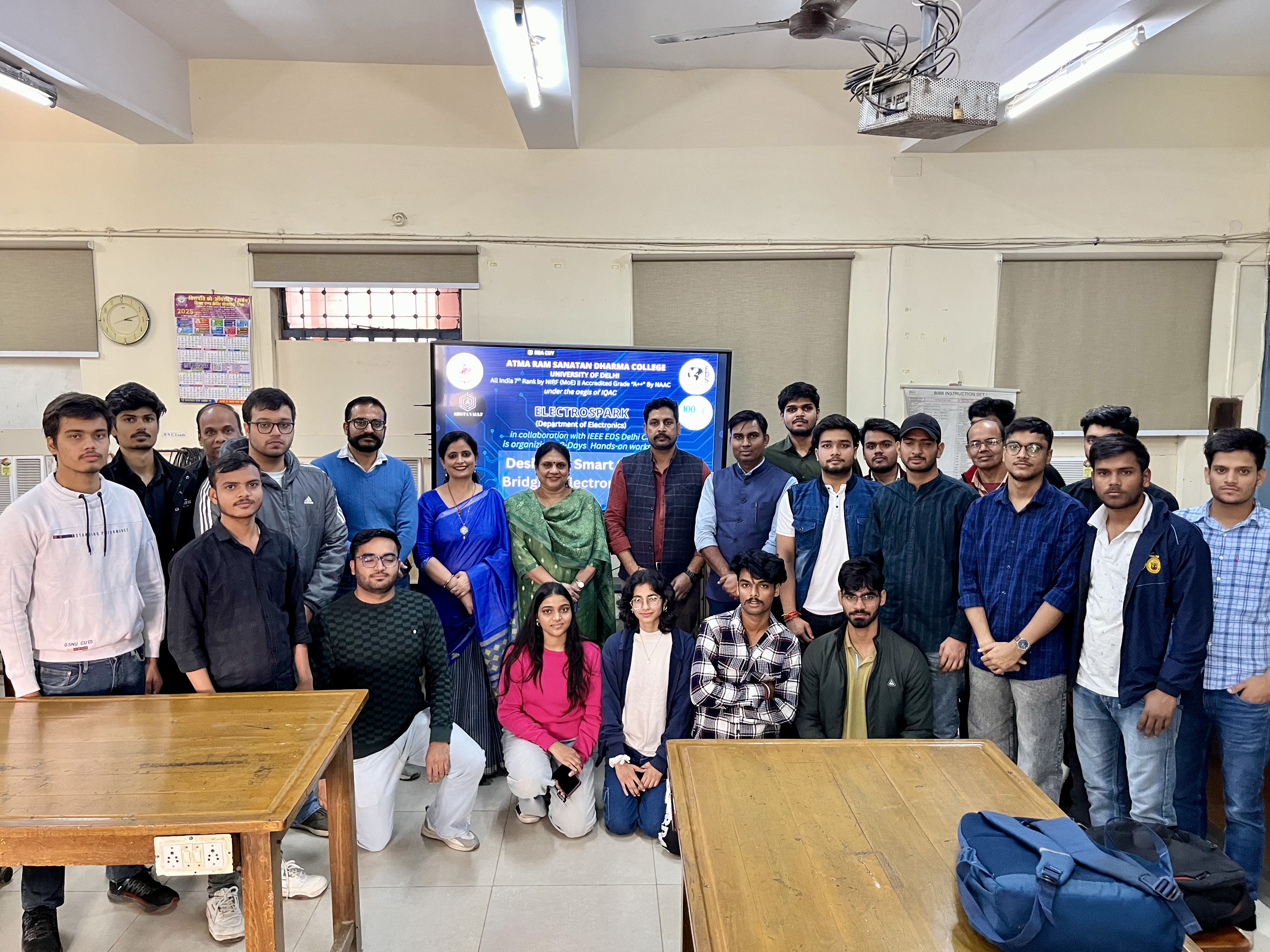
We recently conducted a two-day hands-on workshop at Atma Ram Sanatan Dharma College titled “Designing Smart Systems: Bridging Electronics and IoT”. The workshop was designed to help students understand how modern intelligent systems are built starting from embedded hardware fundamentals to implementing real-time IoT applications.
Students were introduced to the fundamentals of the IoT ecosystem, embedded systems, microcontrollers, and real-time applications, gaining a clear understanding of how connected devices operate. They also explored Edge IoT and AIoT, learning how intelligence can run directly on devices to enable faster and smarter decision-making.
The workshop then moved into a fully practical phase, where students worked with the ESP32 microcontroller, interfaced sensors, wrote embedded code, installed drivers, and practiced hardware debugging. This hands-on experience helped them translate the concepts into real applications and understand how smart systems are built.
We focused on building a complete understanding of the Internet of Things (IoT) and its role in modern technology. Students were introduced to how IoT systems function end-to-end, from sensing and data acquisition to connectivity, cloud processing, and intelligent automation.
The session covered:
IoT architecture (Device layer, Connectivity layer, Cloud platform and Application layer)
Communication technologies (Wi-Fi, BLE, LoRa, cellular IoT)
IoT protocols (MQTT, HTTP/REST, CoAP).
Real-world applications across industries such as smart homes, healthcare, agriculture, wearables, and industrial automation. Along with the technical concepts, we also discussed how students can build a strong career in the IoT domain. They were guided on essential skills such as embedded programming, microcontroller fundamentals, sensor integration, networking concepts, cloud platforms, and the growing importance of AI and data analysis. We talked about the value of hands-on projects, internships, open-source contributions.
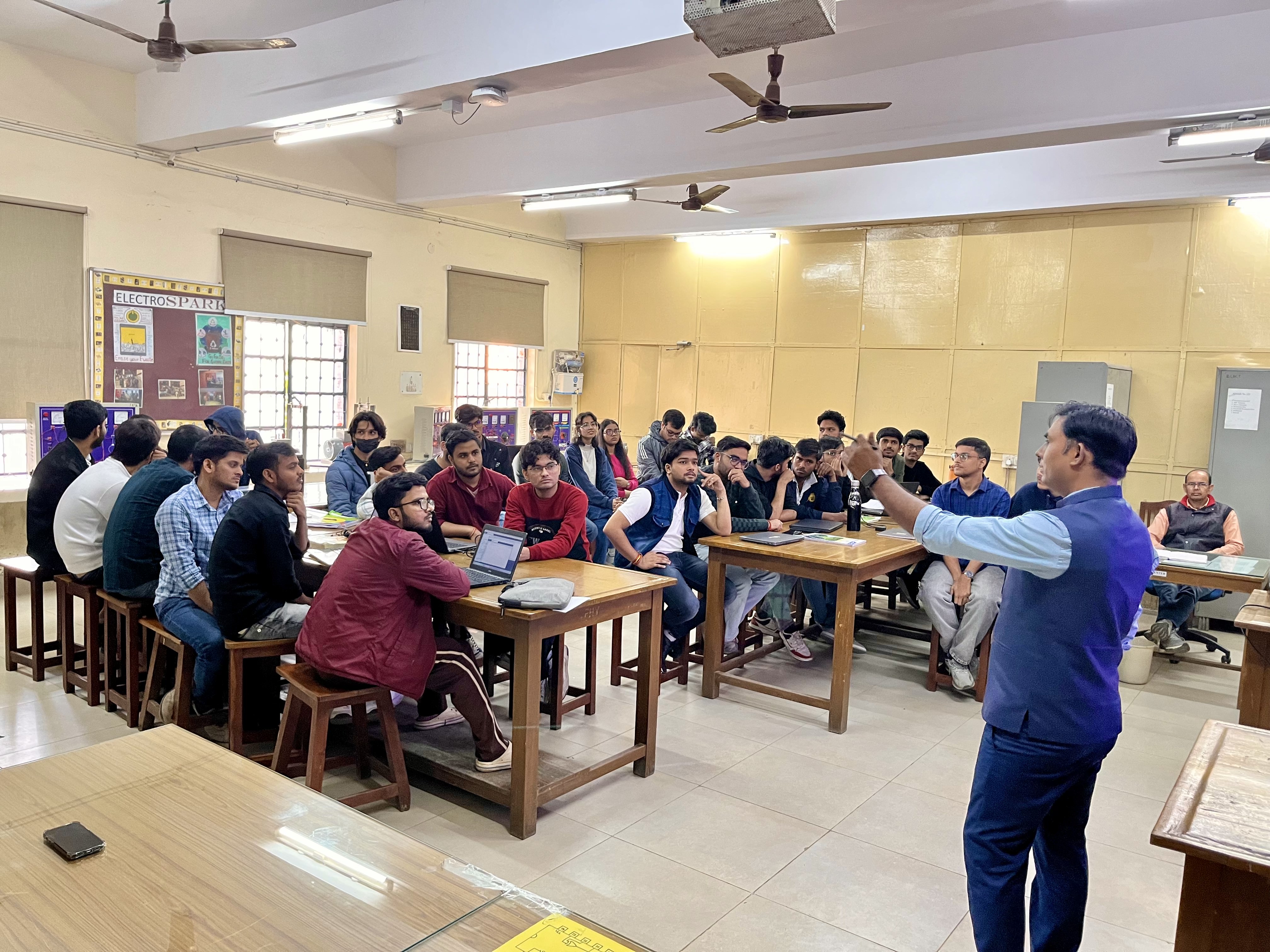
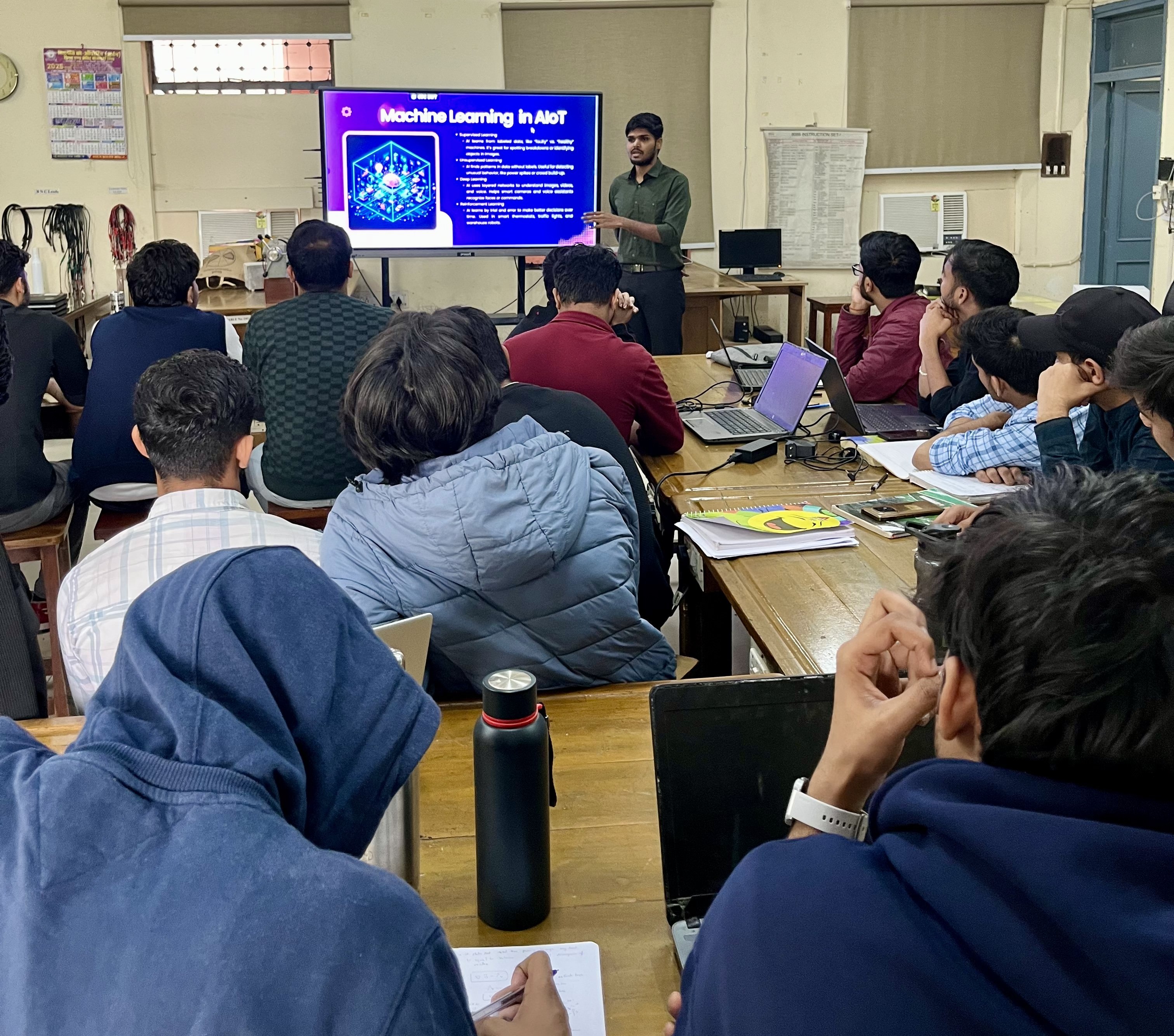
During the workshop, we had the opportunity to deliver an in-depth session on AIoT, exploring how artificial intelligence seamlessly integrates with Internet of Things to create intelligent, autonomous systems. We introduced students to the concept of machine learning models deployed on edge devices, enabling real-time decision-making and predictive analytics without constant cloud dependency.
The session covered how edge computing processes data locally on devices like ESP32 microcontrollers, reducing latency and improving response times for critical applications. We explained practical use cases across agriculture, healthcare, and industrial sectors where AIoT is driving innovation from predictive maintenance in factories to livestock health monitoring on farms.
Students learned how ML algorithms analyze sensor data to detect patterns, make autonomous decisions, and trigger intelligent actions automatically. The enthusiasm and engagement throughout the session demonstrated their grasp of how AI and IoT together create the future of smart systems.